
Silicone Overmolding for Custom OEM Components
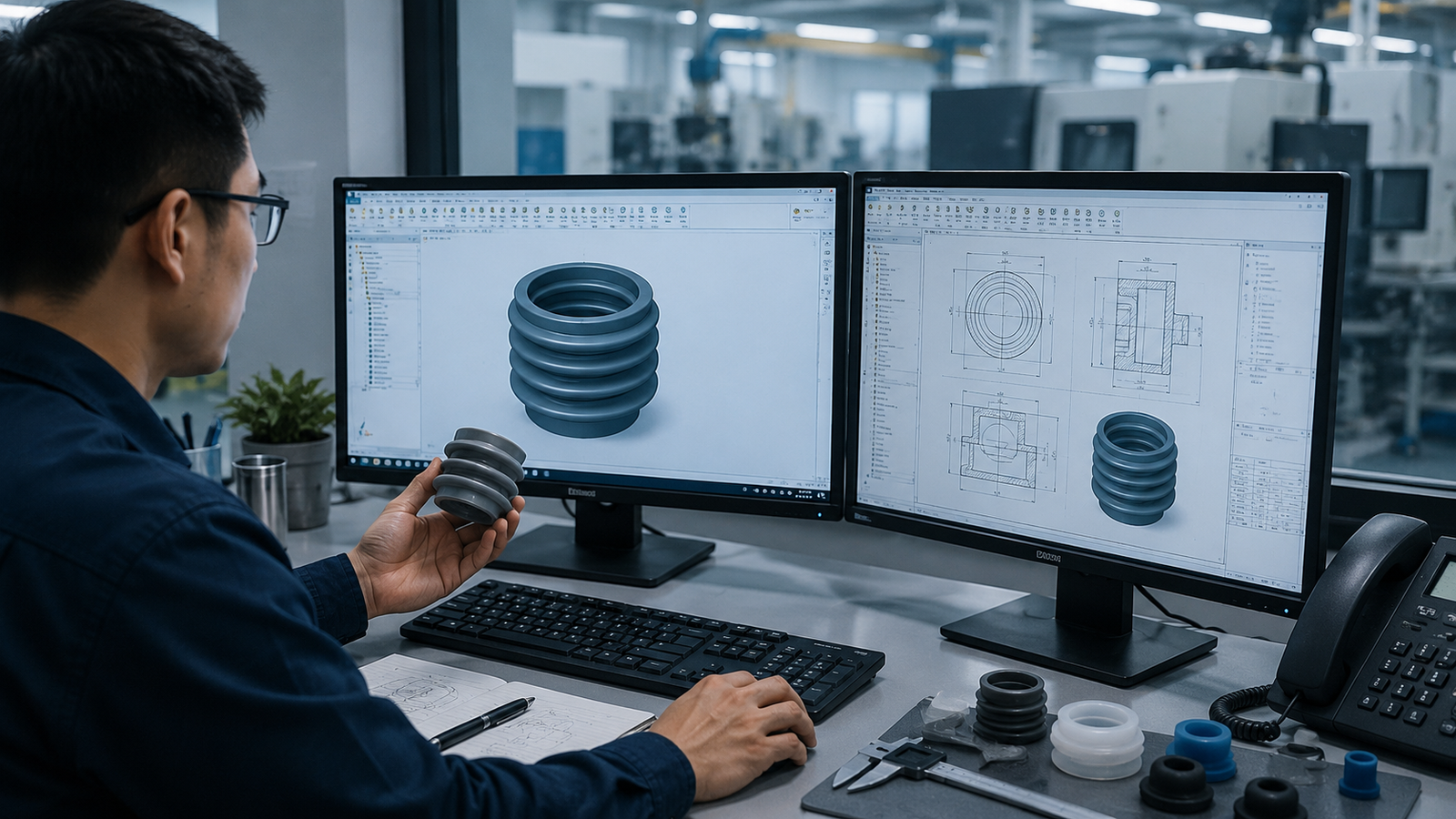
MAVICSILICONE manufactures custom silicone overmolded components, integrating flexible silicone rubber with rigid plastic substrates or metal inserts. Whether your application requires LSR overmolding for precise automotive seals, or custom geometry for industrial vibration protection, our engineering team reviews bonding interfaces, mechanical interlocks, and DFM requirements before initiating custom tooling for prototype or mass production.
Silicone Overmolding Capabilities
| Overmold Material | LSR / Silicone Rubber / Project-Specific Silicone |
|---|---|
| Substrates | Compatible Plastics / Metal Inserts / Other Validated Substrates |
| Bonding | Chemical Bonding / Mechanical Interlocking / Application-Specific Strategy |
| Processes | LSR Injection Overmolding / Silicone Overmolding / Insert Molding |
| Geometry | Custom 2D / 3D Components |
| Hardness & Color | Custom according to application / Pantone where applicable |
| Tooling & Production | Custom Precision Tooling / Prototype / Pilot / Mass Production |
| Tolerance | Geometry and process dependent |
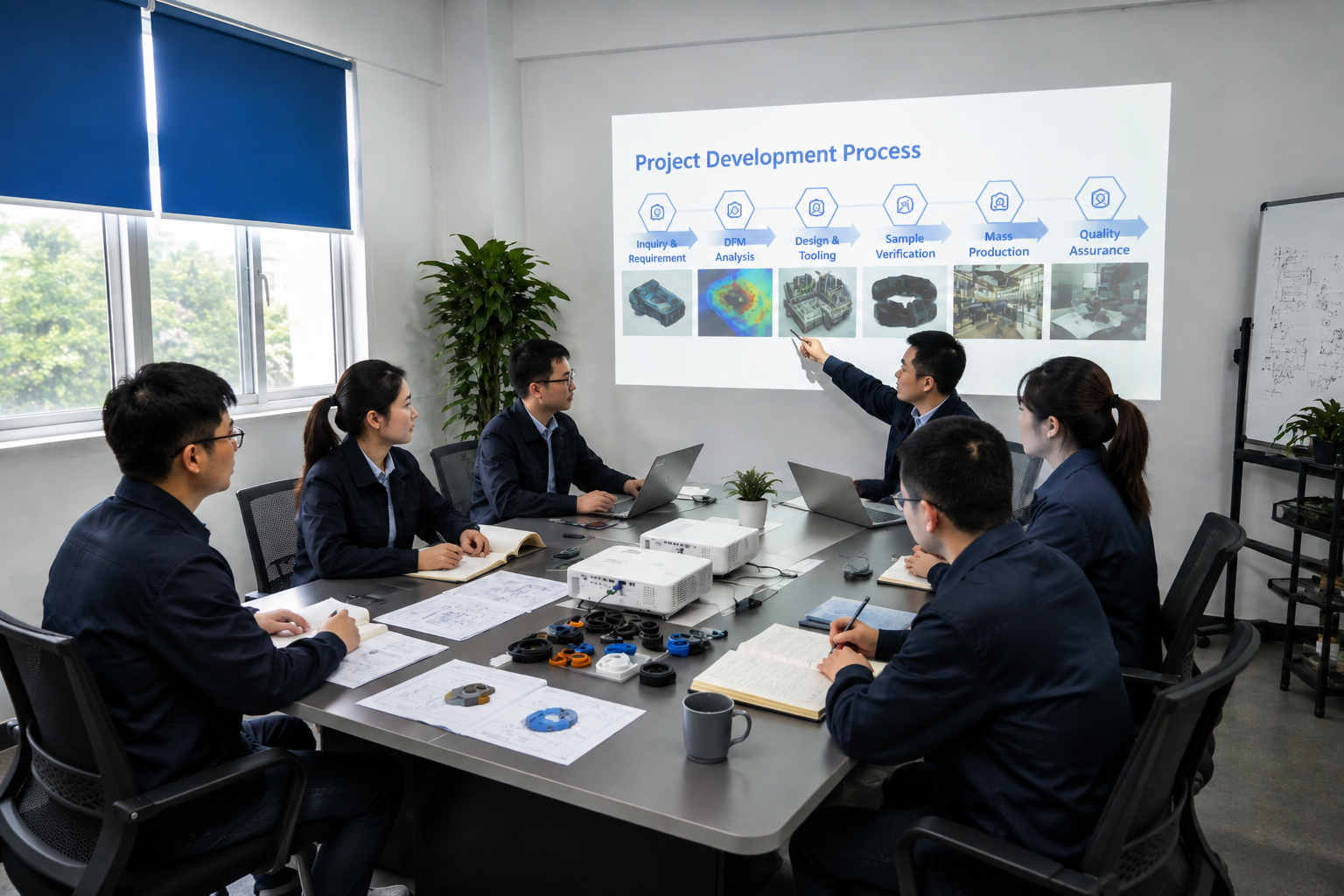
What Is Silicone Overmolding?
Silicone overmolding is a multi-material manufacturing process in which silicone rubber is molded directly around or onto a preformed substrate, commonly plastic or metal, to create one integrated component. The silicone layer can provide sealing, cushioning, insulation, vibration damping, protection, flexible interfaces, and grip where relevant.
Sealing
Integrated gaskets preventing fluid or dust ingress.
Protection
Impact resistance for sensitive internal components.
Insulation
Thermal and electrical isolation barriers.
Multi-Material
Combining rigid structure with elastomeric function.
Silicone Overmolding Configurations
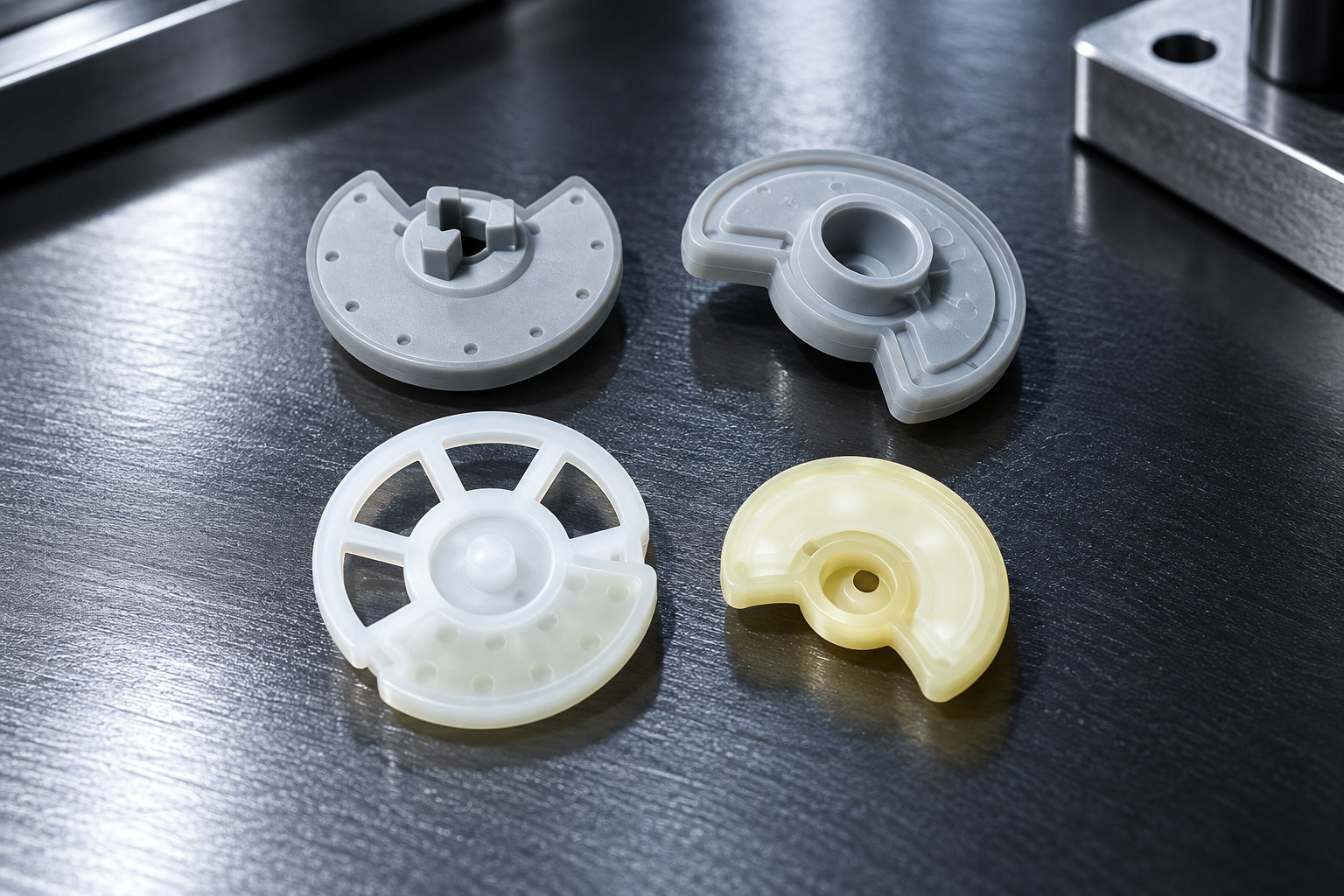
Silicone Over Plastic
Rigid thermoplastic substrate combined with flexible silicone. Requires careful matching of processing temperatures and surface chemistry to achieve optimal bond strength.
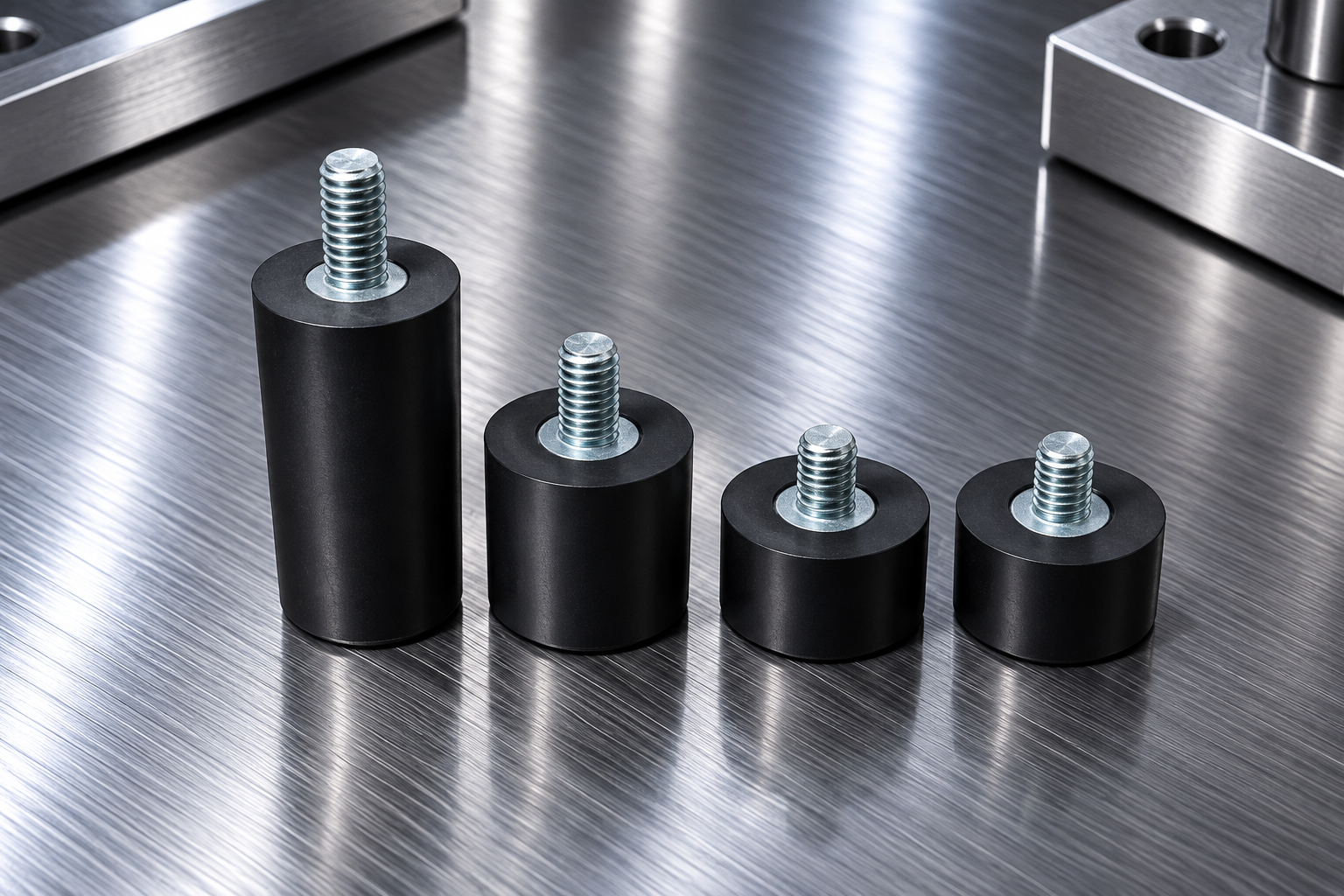
Silicone Over Metal
Metal insert combined with silicone for sealing, protection, insulation or flexible functionality. Often utilizes mechanical interlocking or specialized primers.
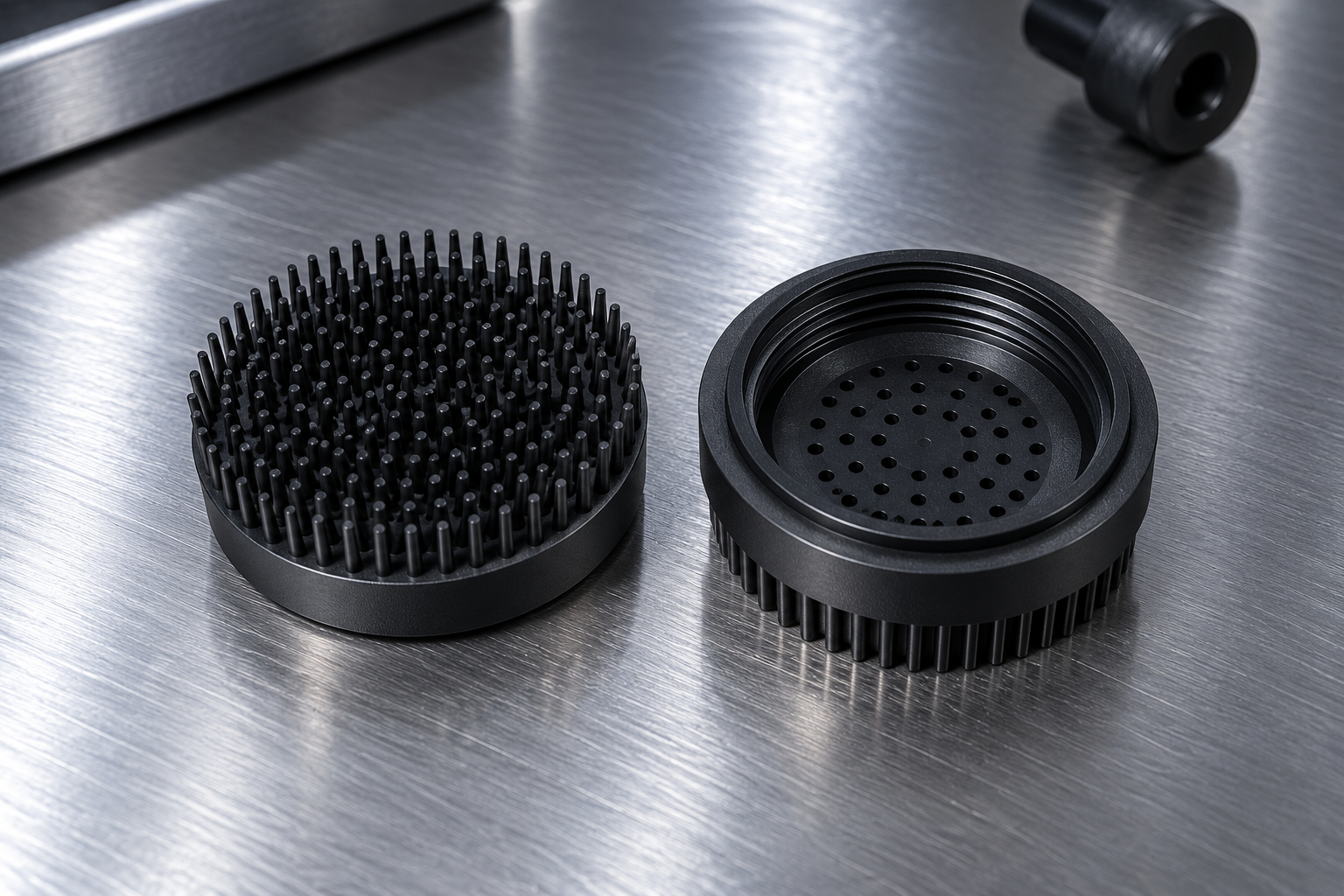
LSR Insert Molding
Preformed inserts (pins, contacts, threaded inserts) placed into an LSR mold before injection, creating a tightly sealed, highly precise sub-assembly.
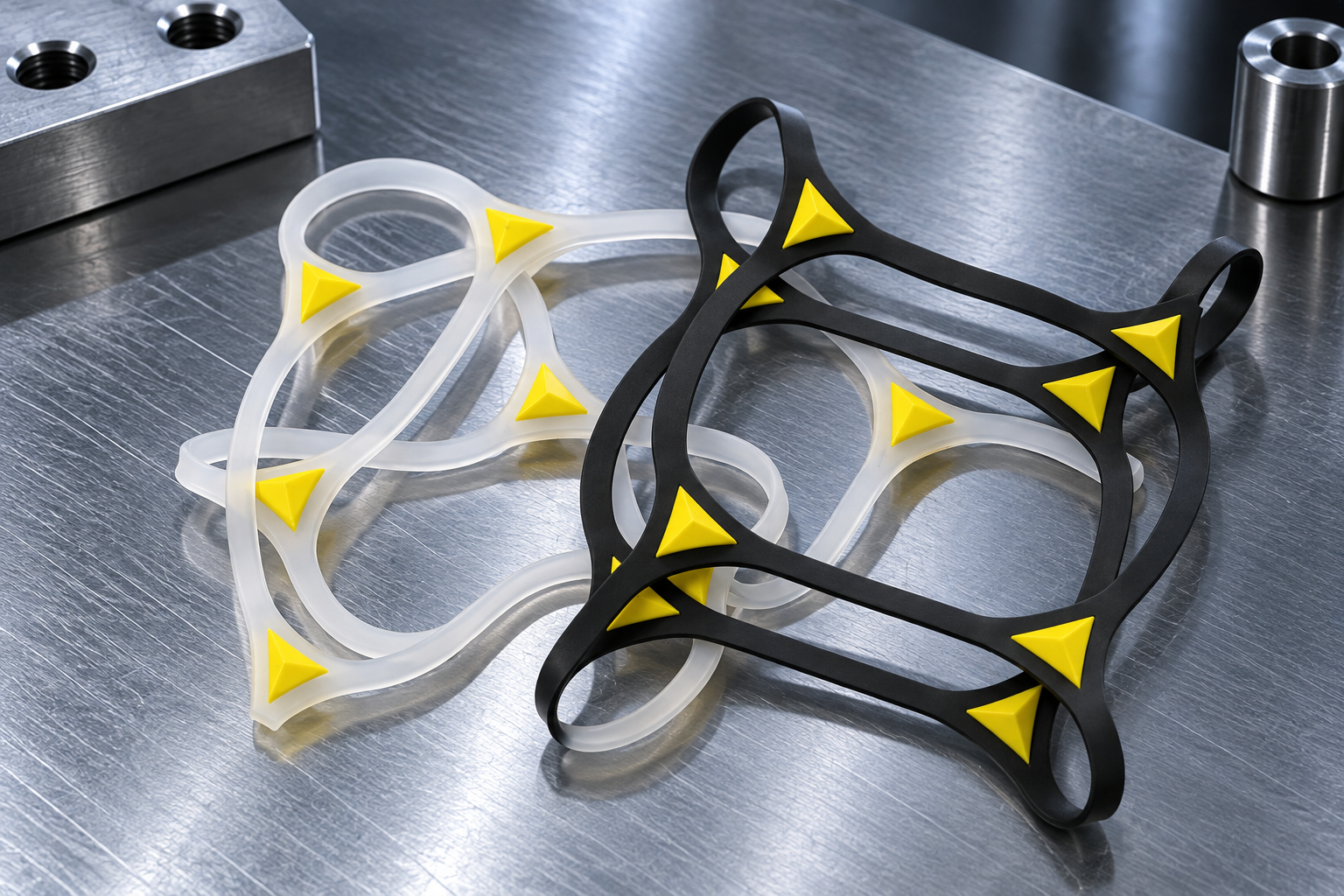
Multi-Material Silicone Components
Integrated structures combining different mechanical functions. Engineered to reduce assembly steps and improve overall component reliability.
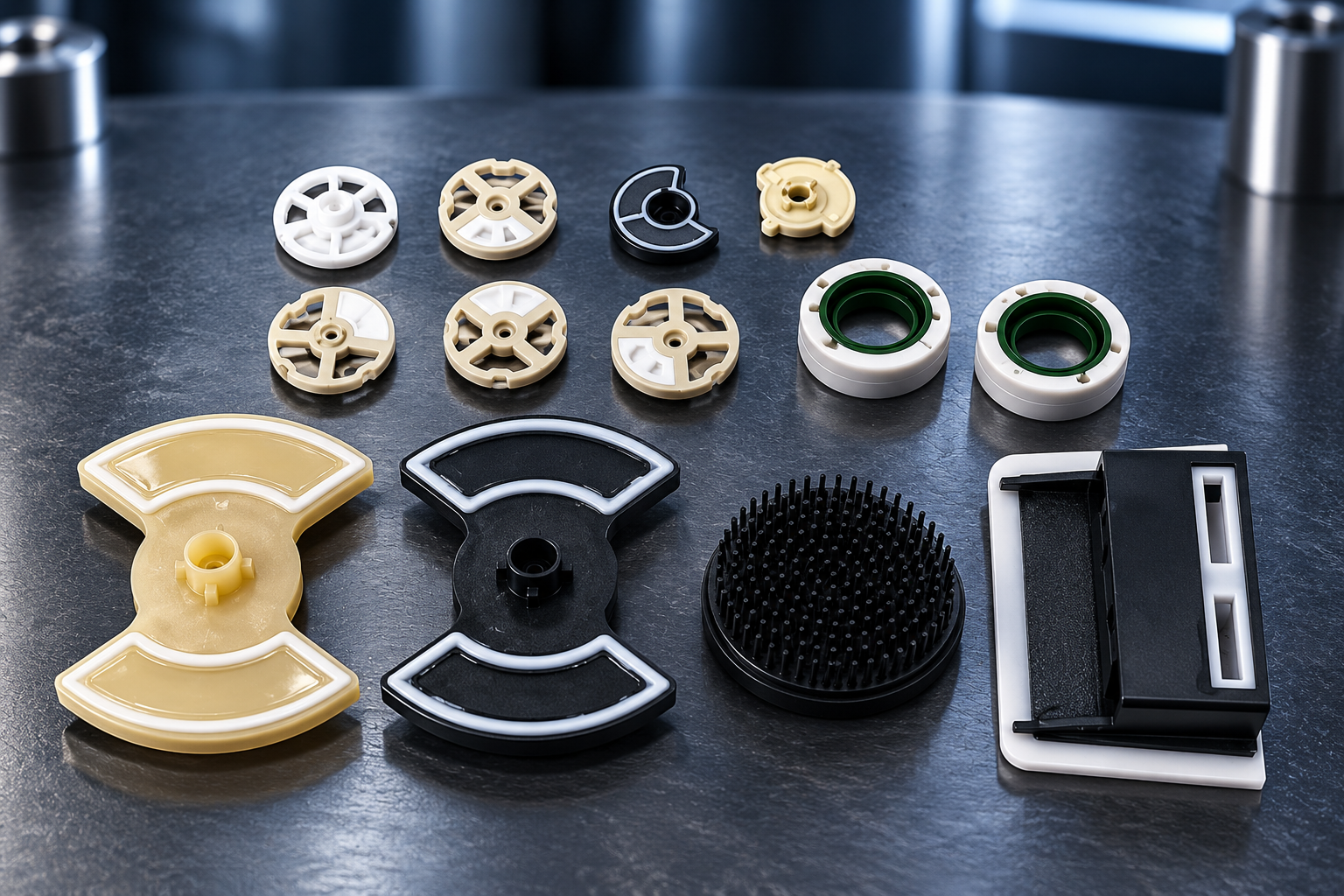
Silicone Overmolding on Plastic
Overmolding silicone onto plastic requires stringent substrate selection. The rigid thermoplastic core must withstand the temperatures and pressures of the silicone molding process without deformation.
Plastic substrate selection must consider:
- Thermal stability
- Dimensional stability
- Surface chemistry
- Molding temperature
- Bonding method
- Geometry
- Mechanical interlocks
- Production process
Potential plastic substrates may include, depending on material compatibility and validation: PC, PA / Nylon, PBT, PPS, PEEK, and other engineering thermoplastics.
Can silicone bond directly to plastic?
Sometimes. Direct silicone-to-plastic bonding depends on the specific silicone formulation and thermoplastic substrate. Some combinations may use self-bonding LSR or chemical adhesion, while others require primers, surface treatment or mechanical interlocking. The material pair should be validated before production tooling is finalized.
Silicone Overmolding on Metal
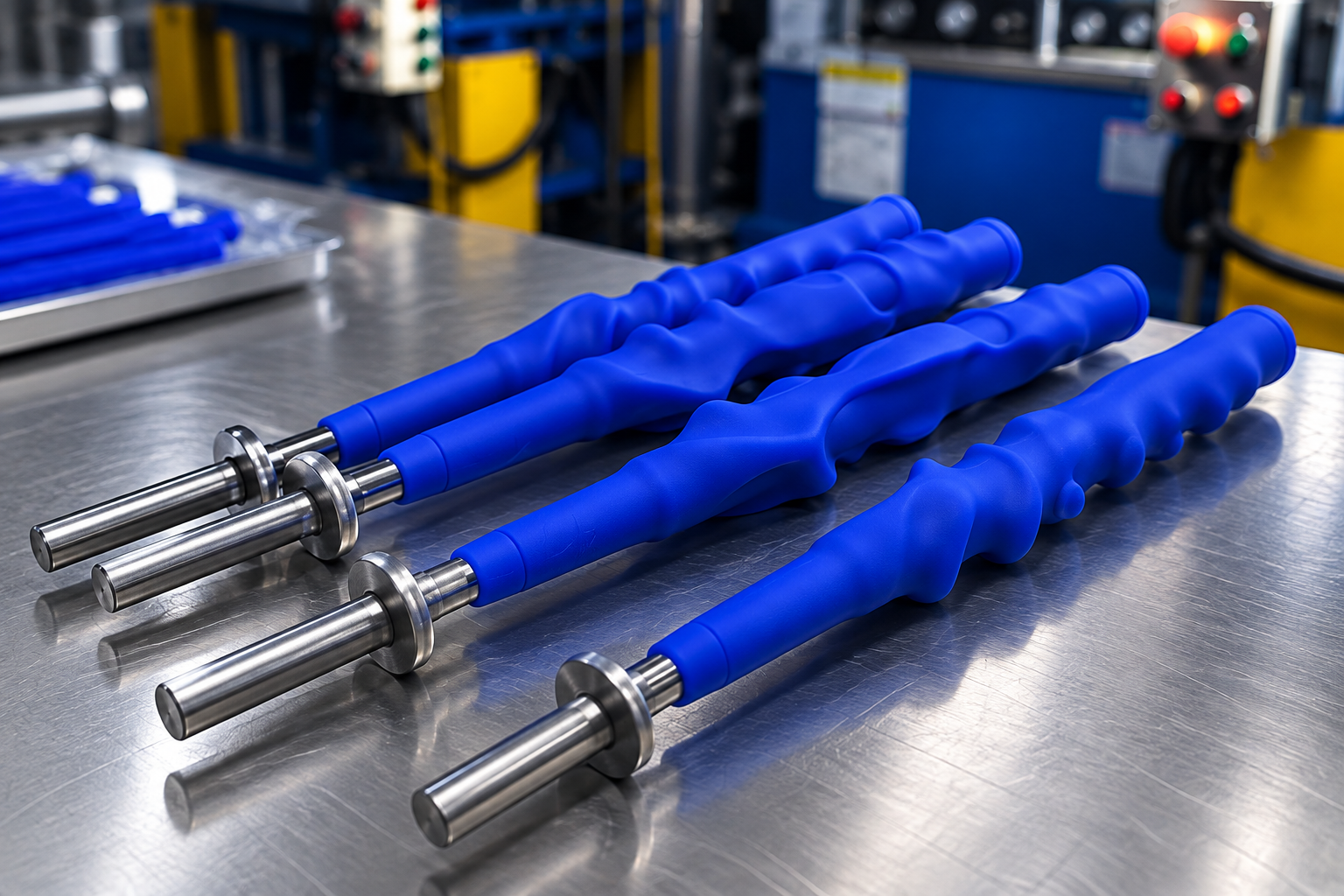
Molding silicone onto metal inserts provides robust mechanical strength combined with silicone's sealing and environmental resistance. Potential substrates include Stainless Steel, Aluminum, Brass, and other validated metals.
Engineering Considerations
- • Surface cleanliness
- • Surface treatment
- • Primer if required
- • Mechanical retention
- • Insert positioning
- • Thermal expansion
- • Silicone shrinkage
- • Tooling & Bonding
Potential Applications
- • Sensors
- • Electrical components
- • Industrial seals
- • Medical instrument parts
- • Automotive components
Silicone Overmolding Material Compatibility
Compatibility should be validated using the exact silicone grade, substrate grade, surface condition and production process.
| Substrate | Chemical Bonding Potential | Mechanical Interlock | Surface Treatment | Thermal Consideration |
|---|---|---|---|---|
| PC | Potentially Compatible | Recommended | May Be Required | Medium |
| PA / Nylon | Potentially Compatible | Recommended | May Be Required | High |
| PBT | Requires Validation | Highly Recommended | Likely Required | High |
| PPS | Requires Validation | Highly Recommended | Likely Required | Very High |
| PEEK | Requires Validation | Highly Recommended | Likely Required | Very High |
| ABS | Material Pair Dependent | Required | Required | Low (Deformation Risk) |
| Stainless Steel | Requires Primer | Highly Recommended | Required (Clean/Prime) | Excellent |
| Aluminum | Requires Primer | Highly Recommended | Required (Clean/Prime) | Excellent |
| Brass | Requires Primer | Highly Recommended | Required (Clean/Prime) | Excellent |
How Does Silicone Bond to Plastic or Metal?
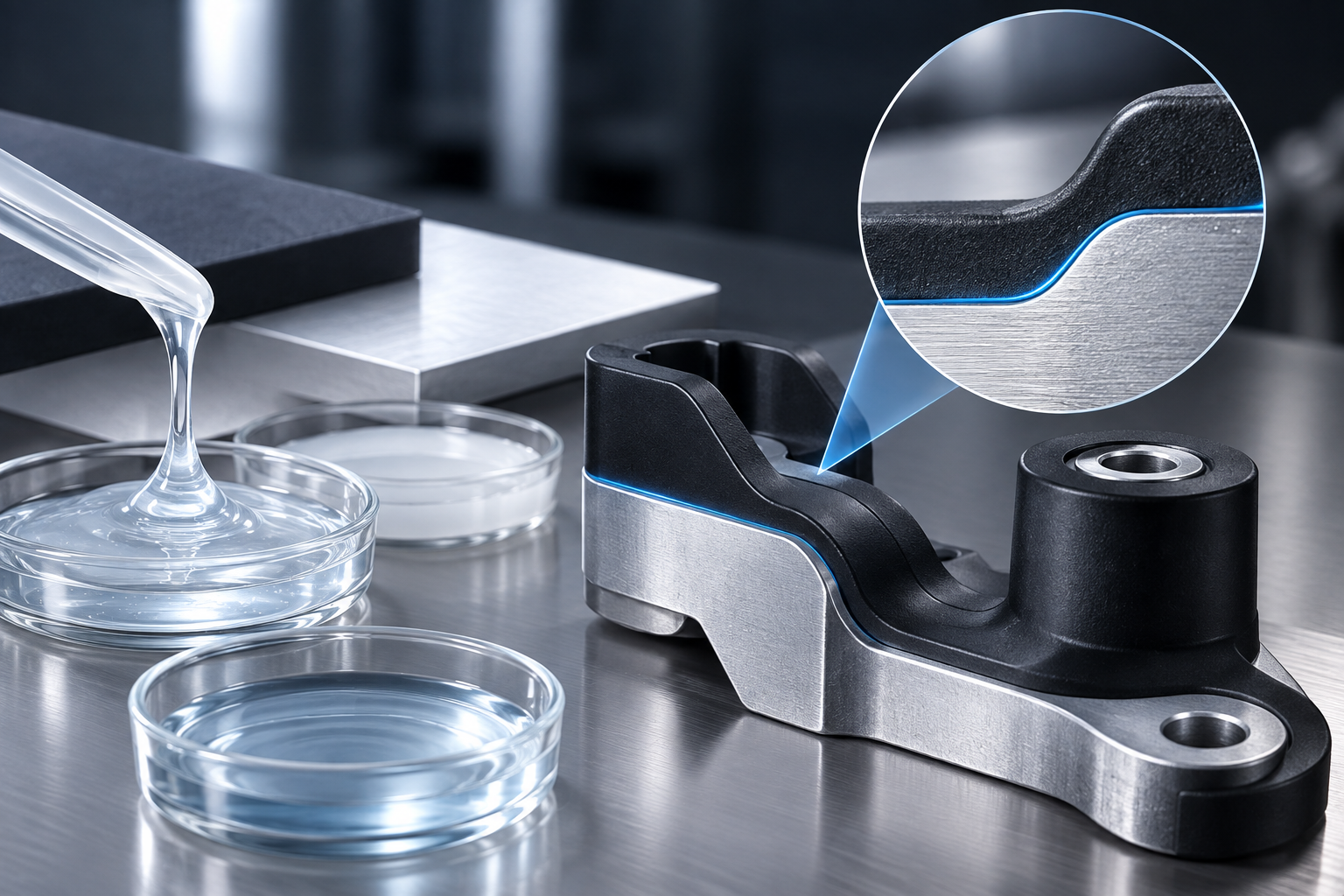
Chemical Bonding
May involve compatible self-bonding silicone, primer, surface treatment or other validated bonding chemistry at the interface level to create strong adhesion.
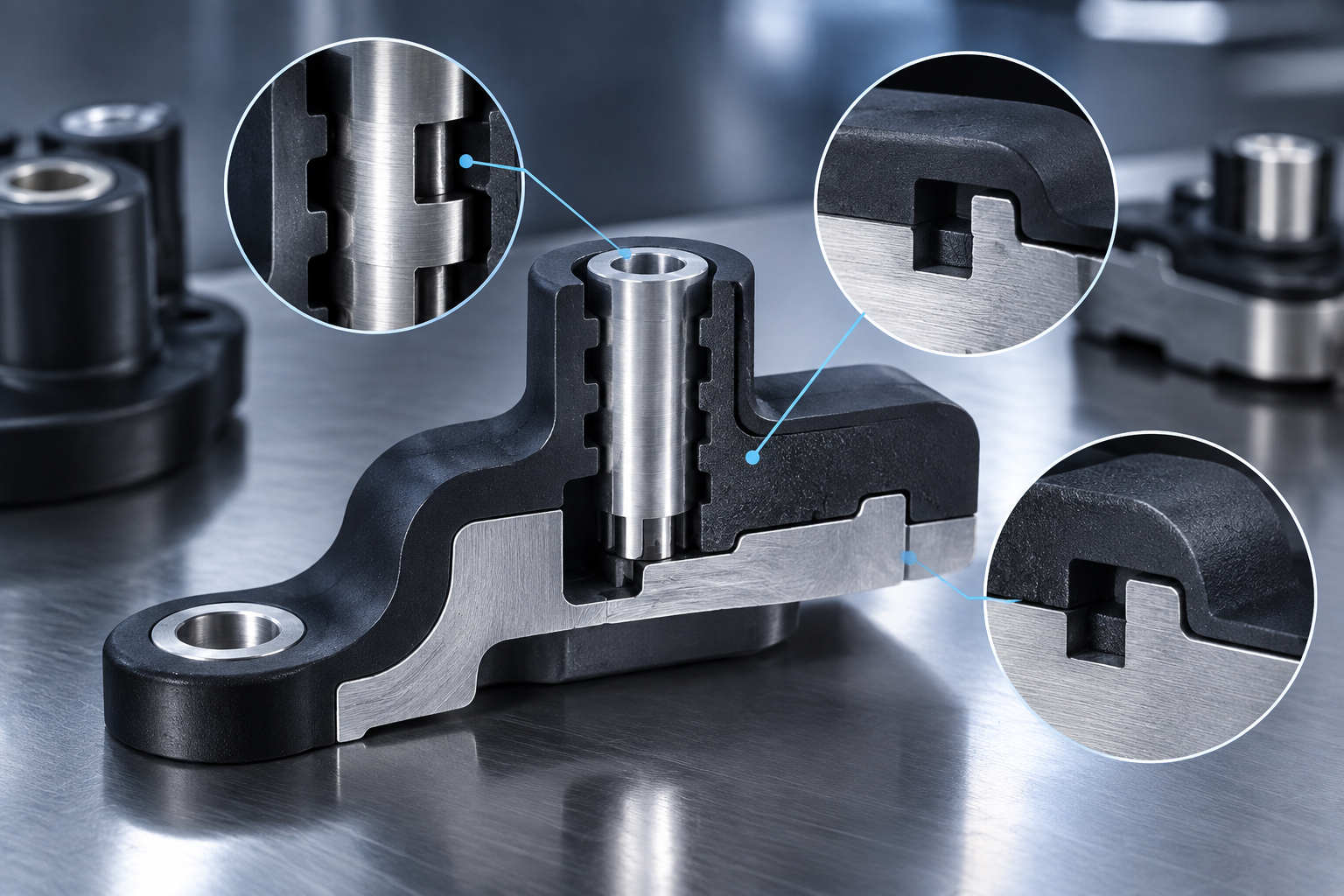
Mechanical Interlocking
Silicone flowing through holes, slots, undercuts, grooves, or anchor features. Mechanical retention provides a physical lock even where direct chemical adhesion is limited.
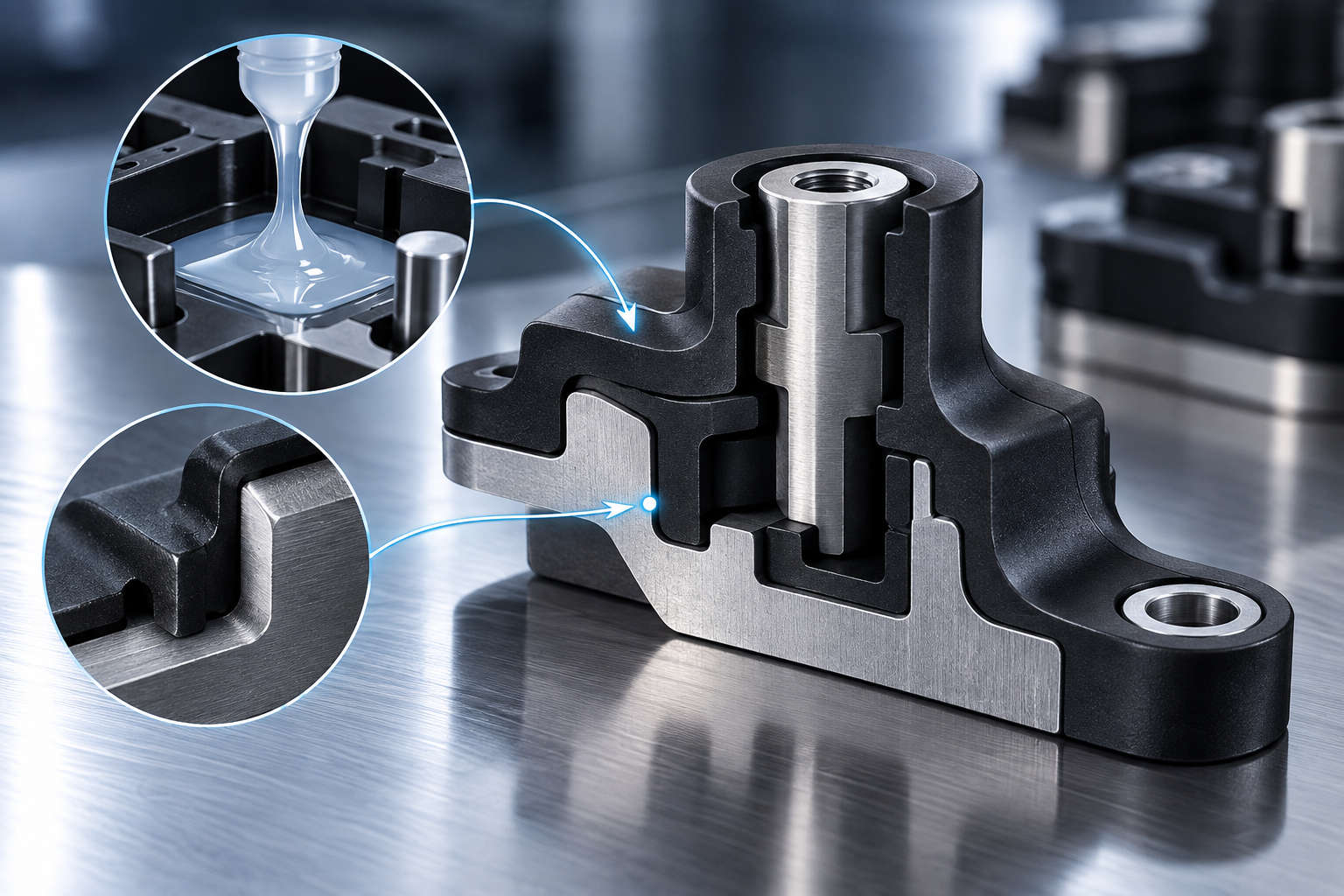
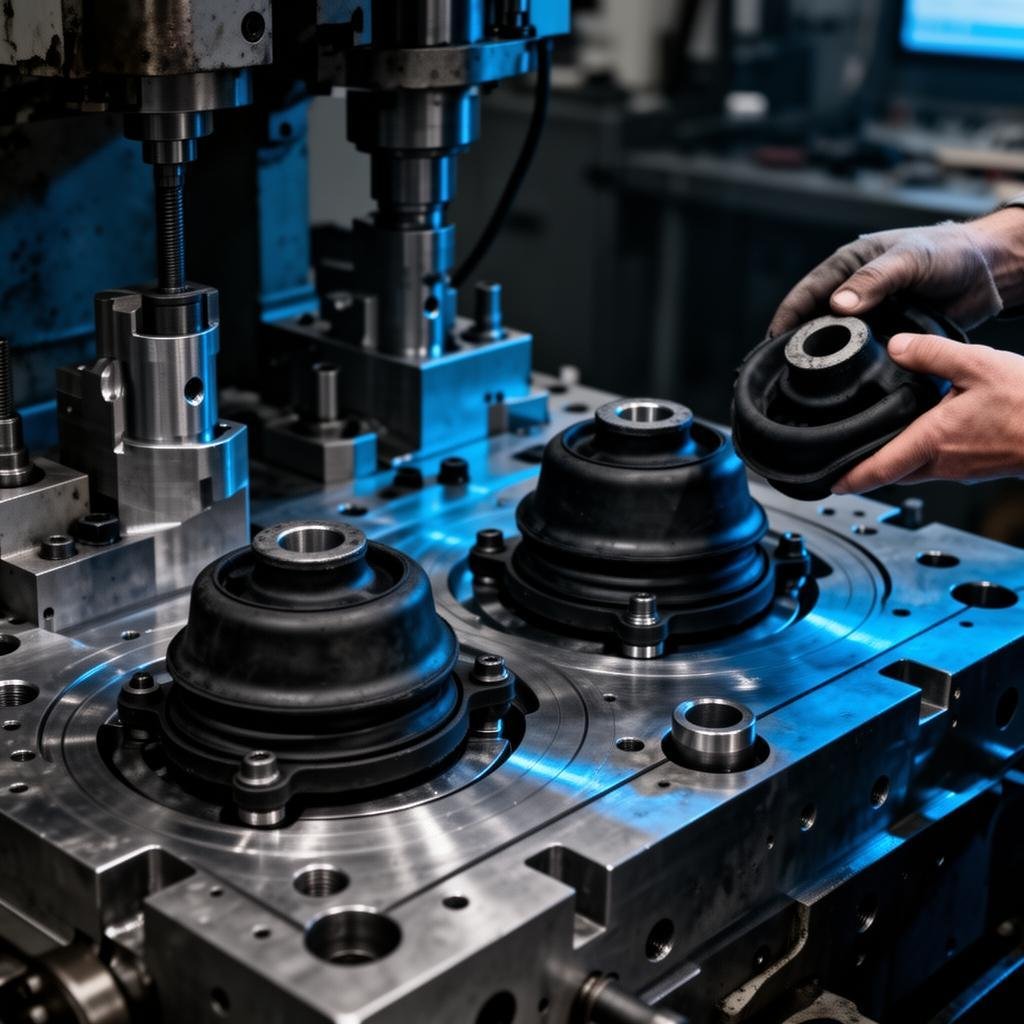
Hybrid Bonding
Combine chemical adhesion + mechanical interlocking. For critical applications, a combination of both provides a significantly more robust and reliable design.
Mechanical Interlocks for Silicone Overmolding
Mechanical interlocking can improve retention when silicone-to-substrate chemical bonding is insufficient or when additional mechanical security is required against peel or shear forces.
Engineering Note: Feature dimensions depend on substrate strength, silicone hardness, part geometry, molding direction and application loads. There are no universal arbitrary dimensions.
Self-Bonding LSR vs Primer vs Mechanical Bonding
No single bonding strategy is best for every project. Selection depends on silicone grade, substrate, environment, load, production volume, geometry, and manufacturing economics.
| Comparison | Self-Bonding LSR | Primer / Surface Treatment | Mechanical Interlock | Hybrid Approach |
|---|---|---|---|---|
| Bonding Mechanism | Chemical | Chemical | Physical | Chemical + Physical |
| Material Dependency | High (Specific Grades) | High | Low | Medium |
| Geometry Dependency | Low | Low | High | High |
| Additional Processing | None | Application/Curing | Substrate Machining | Both |
| Automation Potential | Excellent | Moderate | Excellent | Moderate |
| Typical Use Case | High-volume PC/PA inserts | Metals, complex substrates | Low adhesion substrates | Critical sealing, high stress |
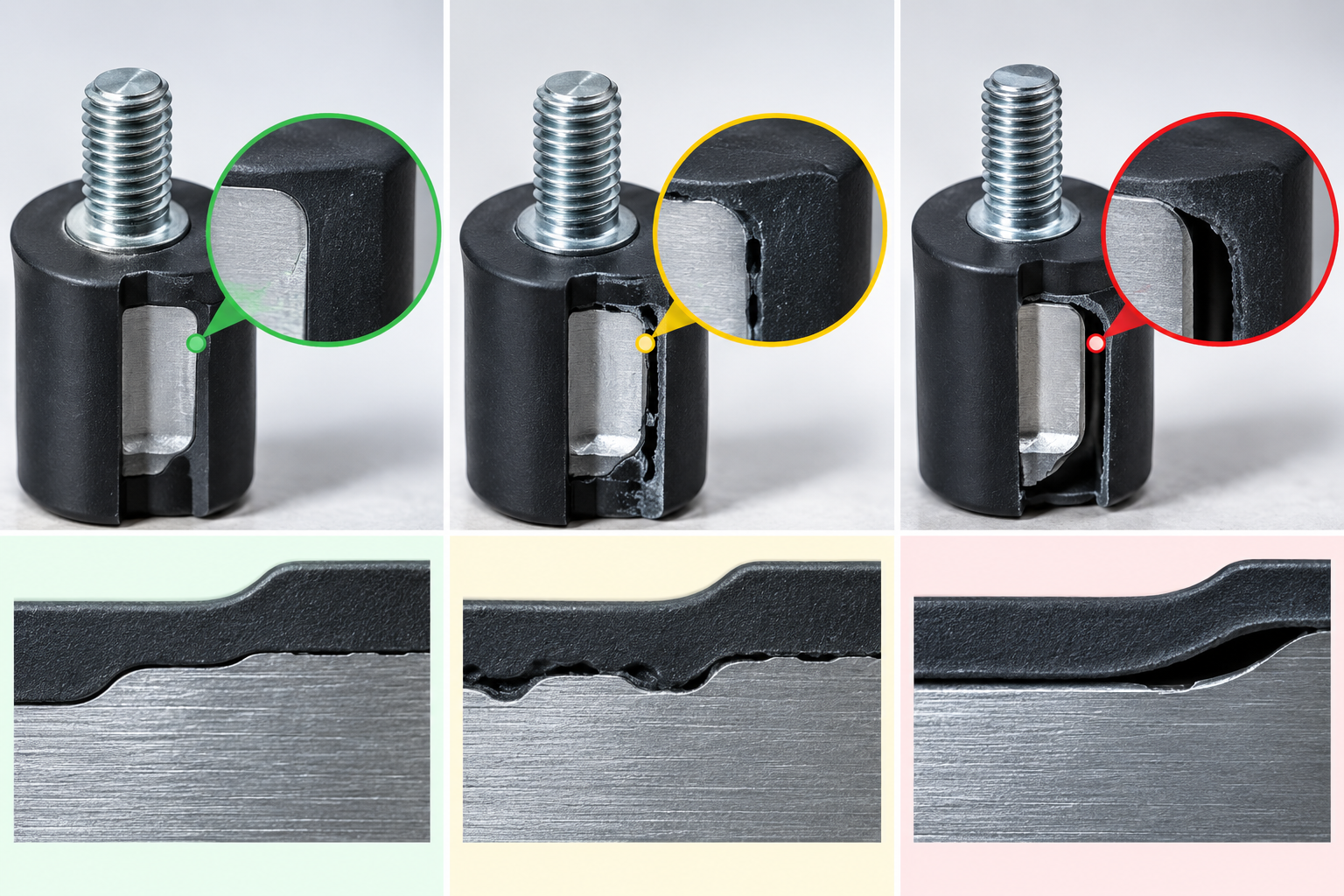
Why Bond Integrity Matters in Silicone Overmolding
Poor interface bonding may lead to delamination, leakage, silicone movement, contamination paths, reduced mechanical performance, and premature failure. For sealing applications, bond integrity should be evaluated together with sealing geometry and compression.
Engineered Around Common Silicone Overmolding Challenges
Delamination
Cause: Material incompatibility, contamination, insufficient mechanical retention, incorrect process conditions.
Response: Review substrate, surface condition, bonding system and geometry.
Flash
Cause: Low-viscosity silicone entering mold gaps due to poor shut-offs or clamping.
Response: Optimize shut-offs, mold fit, clamping and parting-line design.
Incomplete Fill
Cause: Flow restriction, venting or gate issues.
Response: Review silicone flow path, gate, venting and geometry.
Insert Movement
Cause: Insufficient fixture or insert retention during molding injection.
Response: Improve locating and holding features in tooling.
Substrate Deformation
Cause: Thermal or mechanical stress during molding.
Response: Review substrate material, wall thickness, temperature and tooling support.
Bond Variation
Cause: Surface contamination or inconsistent incoming substrate condition.
Response: Control surface preparation and incoming substrate quality.
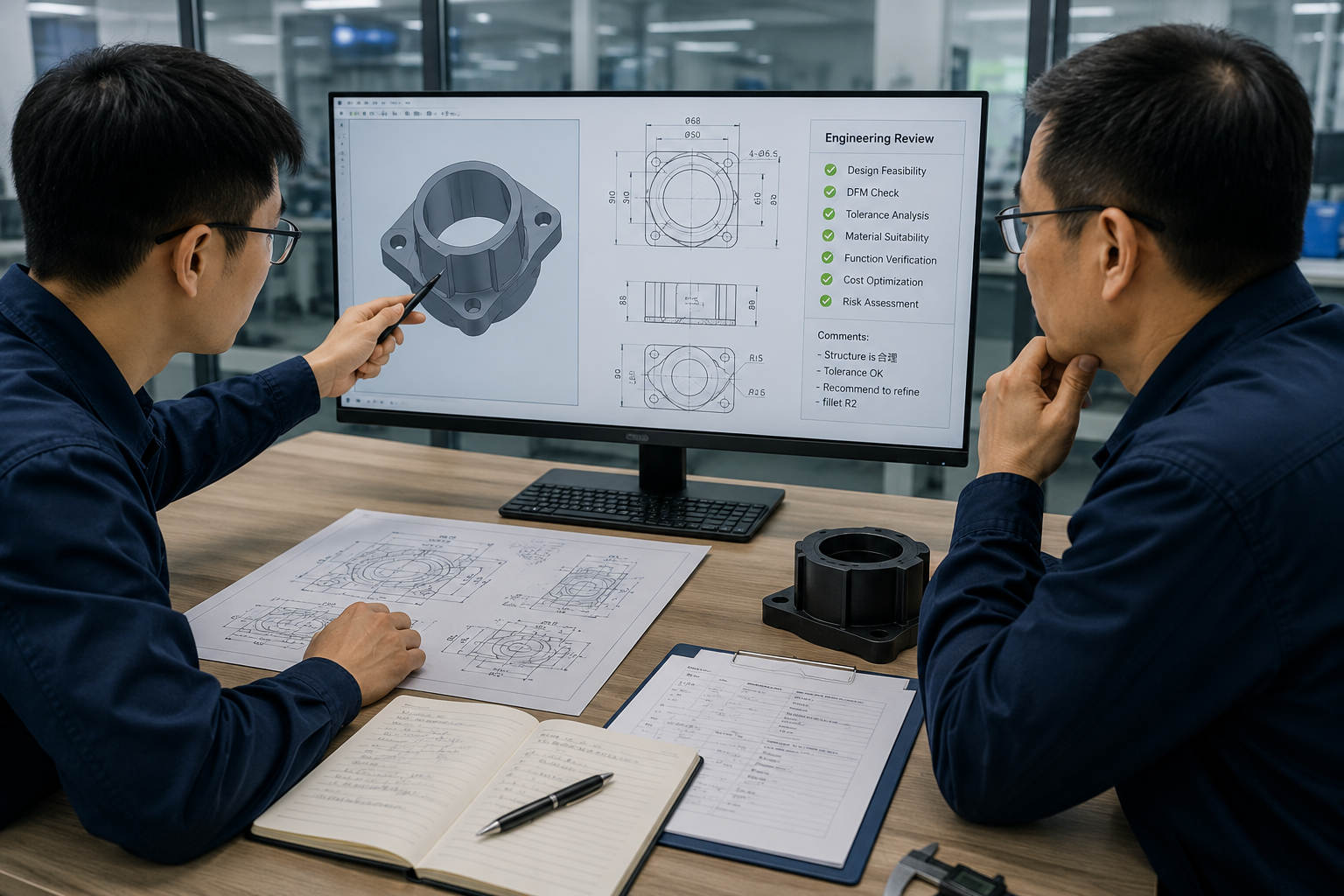
DFM Review for Silicone Overmolded Parts
A successful overmolded component must be designed as one integrated multi-material system rather than as two independent parts. Our engineering review covers critical variables before tooling begins.
DFM Checklist
- Substrate Material
- Silicone Material
- Bonding Interface
- Mechanical Interlock
- Silicone Wall Thickness
- Flow Path & Gate Location
- Parting Line & Venting
- Flash Risk & Shut-Off
- Insert Location & Support
- Undercuts & Demolding
- Shrinkage & Tolerance
- Critical Sealing Areas
Silicone Overmolding vs Insert Molding
Terminology often overlaps. Overmolding describes molding an additional material onto or around an existing substrate. Insert molding emphasizes placing a preformed insert—such as metal or plastic—into a mold before molding material around it. A silicone-overmolded metal component can therefore also be described as an insert-molded component depending on process context.
| Process Feature | Overmolding (General) | Insert Molding (Specific) |
|---|---|---|
| Substrate | Often large, complex pre-molded parts | Often discrete pins, threaded inserts, contacts |
| Material Combination | Plastic+Silicone, Metal+Silicone | Metal inside Silicone/Plastic |
| Automation | Transfer, 2-Shot, or Robotic | Often automated reel-to-reel or robotic loading |
Silicone Overmolding vs 2-Shot Molding
OVERMOLDING
2-SHOT MOLDING
Overmolding is often more flexible when using premanufactured plastic or metal inserts. 2-shot molding can integrate multiple molding stages into one automated manufacturing system. [Confirm 2-shot molding capability before publishing].
LSR vs HCR for Silicone Overmolding
LSR may be preferred for automated precision injection overmolding and complex geometries. HCR / solid silicone may be appropriate for other overmolding structures, materials and production requirements. Neither is universally better.
| Feature | LSR (Liquid Silicone Rubber) | HCR (High Consistency Rubber) |
|---|---|---|
| Material State | Liquid (2-part A/B) | Solid (Gum base) |
| Molding Process | Injection Molding | Compression / Transfer Molding |
| Complex Geometry | Excellent (Flows into micro-gaps) | Moderate |
| Automation | High | Low to Moderate |
| Tooling Complexity | High (Tight tolerances required) | Moderate |
Benefits of Silicone Overmolding
Integrated Sealing
Mold sealing features directly onto rigid components, eliminating leak paths.
Reduced Assembly
Potentially eliminate separate gasket insertion or adhesive assembly steps on the line.
Part Retention
Reduce risk of loose, forgotten, or displaced seals during final product use.
Electrical Insulation
Add silicone insulation exactly where appropriate on metal conductors or housings.
Vibration & Impact
Use silicone's elastomeric behavior around rigid structures to dampen shock.
Multi-Functional
Combine rigid structural support and flexible functionality in one integrated part.
*Engineering note: Actual benefits depend on product design, material combination and production volume.
Silicone Overmolding Applications
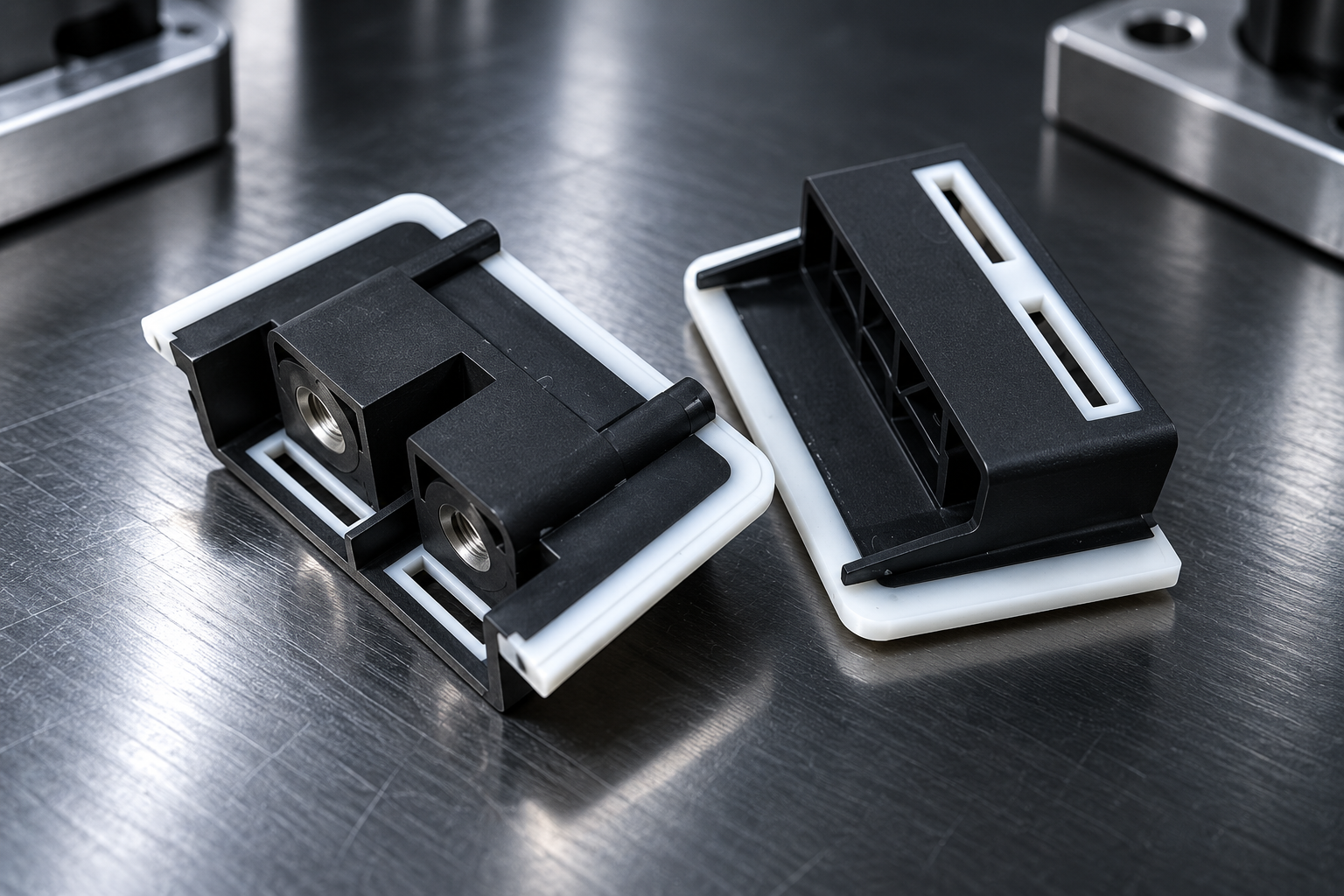
Automotive
- • Wire harness connectors
- • Sensor housings
- • Electrical connectors
- • Integrated seals
- • Lighting components
Medical Devices
- • Device housings
- • Instrument components
- • Sealing interfaces
- • Fluid-management components
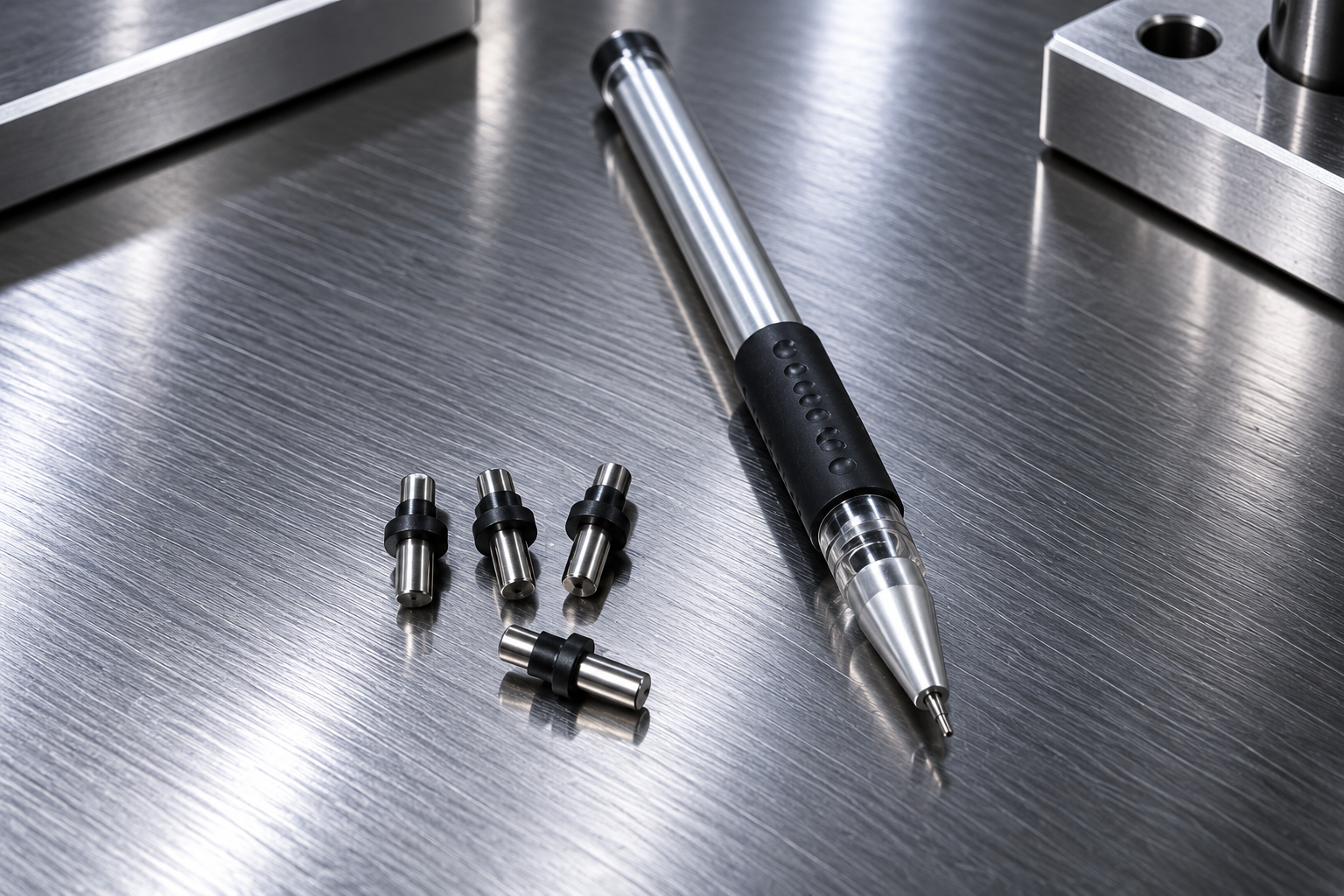
Electronics
- • Connector seals
- • Insulation
- • Sensor protection
- • Environmental sealing
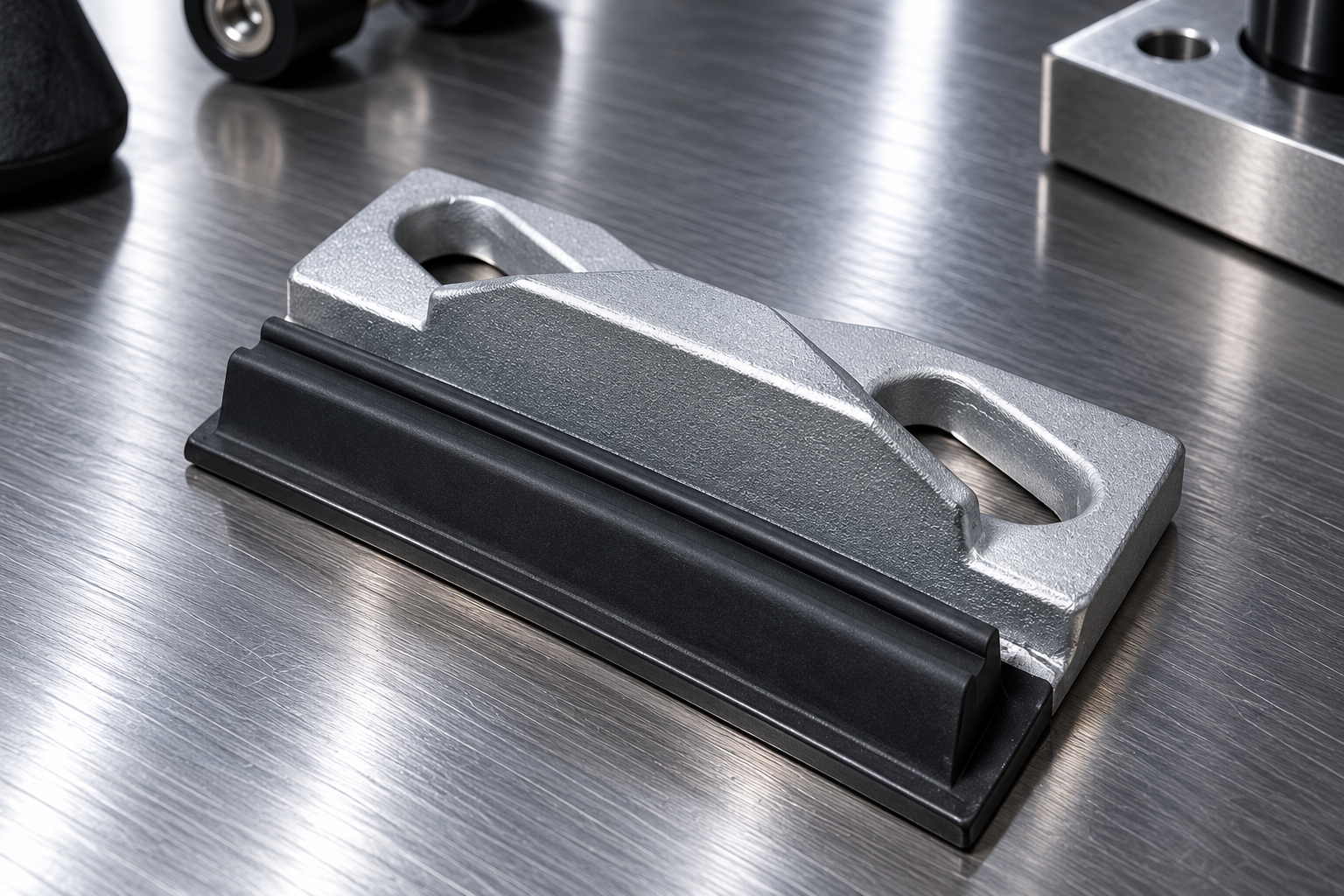
Industrial Equipment
- • Sensors & Valves
- • Automation equipment
- • Instrumentation
- • Electrical equipment
How to Choose the Right Silicone Overmolding Process
What Information Do We Need for a Quote?
Don't know whether your materials will bond?
Send us the substrate material and application requirements for engineering review.
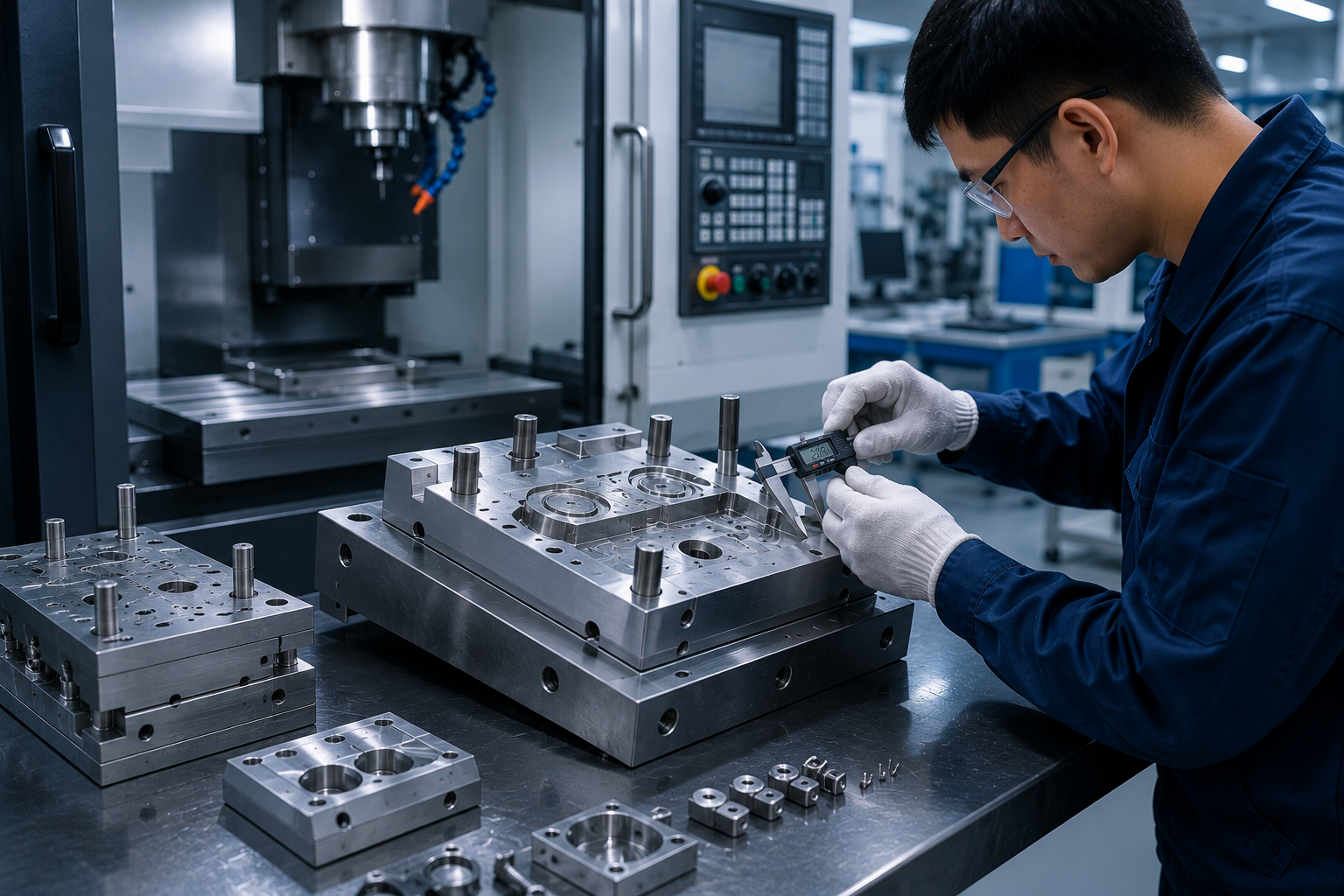
Precision Tooling for Silicone Overmolding
Overmolding tooling must precisely control both the silicone cavity and the preformed substrate. Important considerations include substrate locating, insert retention, shut-off, silicone flow, venting, flash control, thermal behavior, and demolding mechanics.
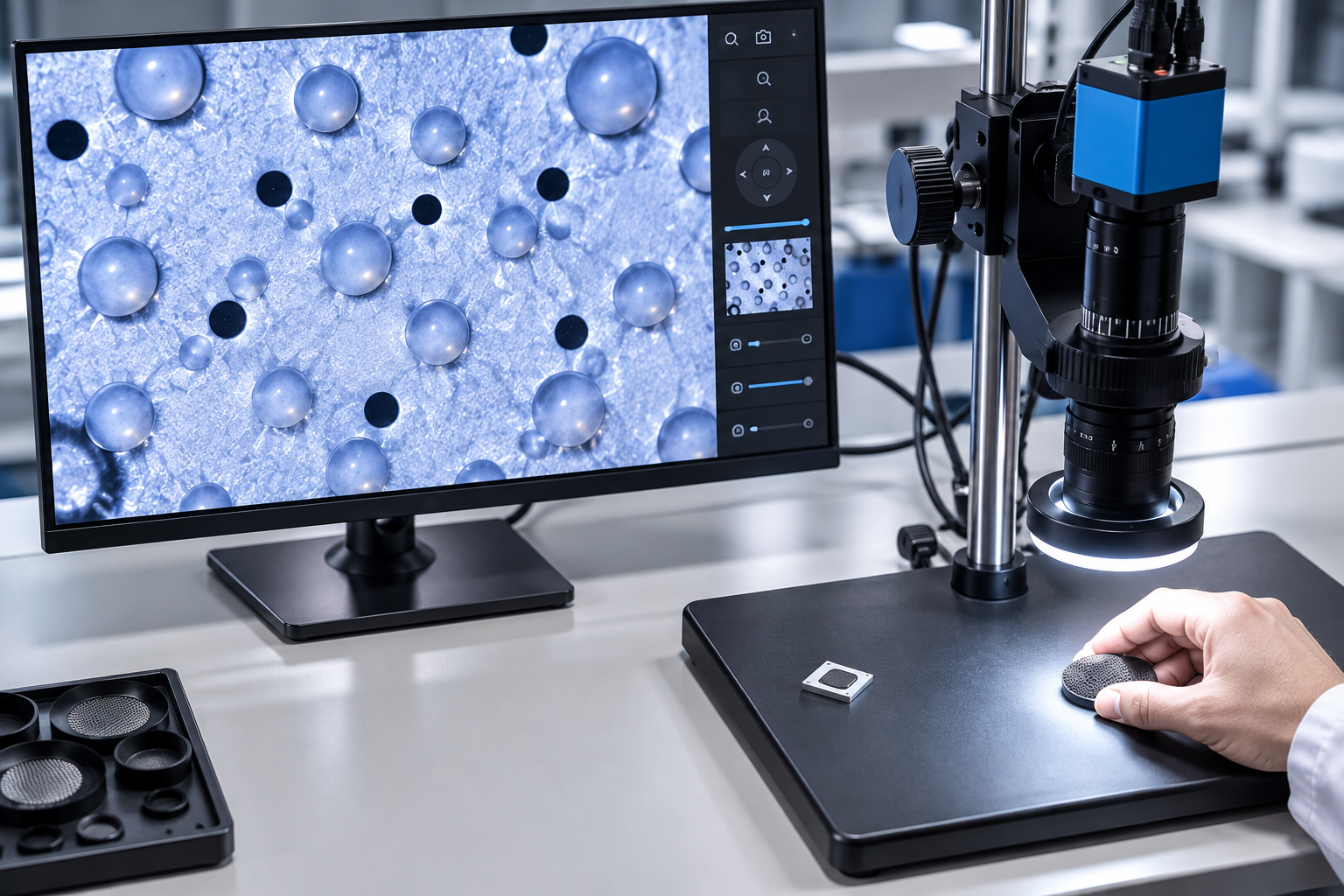
Quality Control for Silicone Overmolded Parts
Quality assurance for multi-material components involves verifying both the insert and the final overmolded structure. We provide PPAP support where requested and applicable.
- • Incoming Substrate Inspection
- • Material Verification
- • Insert Position Inspection
- • Dimensional Inspection
- • Flash Inspection
- • Visual Inspection
- • Bond Integrity Inspection
- • Documentation Support
From Prototype to Repeat Overmolding Production
Material compatibility and bond behavior should be evaluated before scaling into mass production.
Built for Custom Silicone Overmolding Projects
Engineering Collaboration
Review the complete multi-material component before tooling.
Material & Substrate Review
Evaluate silicone and substrate requirements together.
Bonding Strategy
Chemical, mechanical or hybrid approaches according to application.
Custom Tooling
Tooling designed around insert positioning, silicone flow and shut-offs.
Prototype to Production
Support project development before repeat manufacturing.
Quality Documentation
Inspection and PPAP-related support according to project requirements.
Silicone Overmolding FAQ
What is silicone overmolding?
Silicone overmolding is a multi-material manufacturing process in which silicone rubber is molded directly around or onto a preformed substrate, commonly plastic or metal, to create one integrated component.
This process eliminates separate assembly steps and provides integrated sealing, insulation, or cushioning directly on the rigid core.
Can silicone bond directly to plastic?
Sometimes. Direct silicone-to-plastic bonding depends on the specific silicone formulation and thermoplastic substrate. Certain self-bonding LSR grades adhere chemically to specific plastics like PC or PA.
Other combinations require primers, surface treatment, or mechanical interlocking. The material pair should be validated before production tooling is finalized.
What is mechanical interlocking?
Mechanical interlocking is a design strategy where silicone flows through or around physical features on the substrate—such as through-holes, undercuts, or grooves—creating a physical lock.
This provides retention even when chemical adhesion is weak or non-existent, preventing delamination under mechanical stress.
What causes silicone overmolding delamination?
Delamination (interface separation) is typically caused by material incompatibility, surface contamination on the insert, insufficient mechanical retention, or incorrect molding temperatures/pressures.
Preventing it requires proper substrate selection, strict surface cleanliness, and validating the bonding strategy (primer, self-bonding LSR, or mechanical locks) during prototyping.
What information is needed for an overmolding quotation?
We require a 2D drawing and 3D CAD model (STEP/IGES), specific substrate material grade, silicone hardness requirements, operating environment (temp/media), and estimated annual quantity.
If you are unsure about material compatibility, provide the application details and our engineers will review the bonding options.
Need a Custom Silicone Overmolded Component?
Send your CAD drawing, substrate material, sample or application requirements. Our team can review silicone material, substrate compatibility, bonding strategy, geometry, tooling and production requirements before quotation.
Contact MAVICSILICONE
Email: zmwsilicone@gmail.com
Phone: +85253076324
Address: 2nd Floor, No. 93 Jiyin Road, Industrial Concentration Zone, Tong'an District, Xiamen, Fujian, China